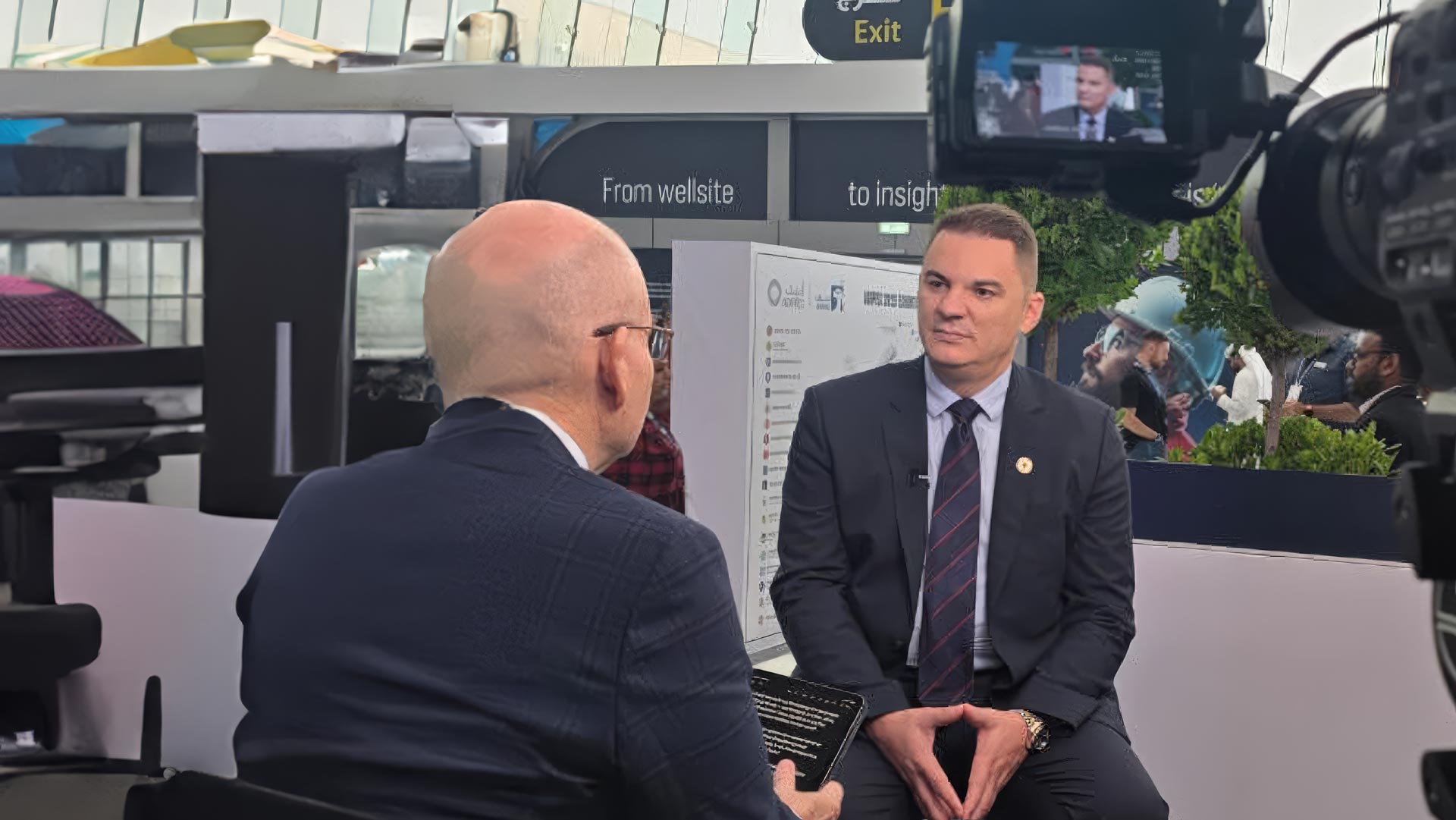

A conversation with Martin Erath, GM & Head of Middle East at TRACTEBEL-ENGIE, on how the war is reshaping energy systems, infrastructure, and project finance across the region—and the opportunities this creates for technology, reconstruction, and regional powers.
Martin Erath: thank you for this important question. In my view, what distinguishes the current US–Iran–GCC conflict from previous Middle East crises is that it breaks the older pattern of controlled, deniable escalation and instead pulls the Gulf directly into open, multidomain confrontation with global economic and great power stakes.
The Gulf region is no longer a rear area—it has become an active battlespace.
Historically, GCC states could host bases yet remain comparatively insulated. That assumption has eroded as missile/drone threats and cyber-attacks extend across all GCC countries targeting critical civilian and strategic infrastructure (energy facilities, ports, desalination plants, data centers, banks, major cities) sits inside the operational theatre.
Looking at this crisis “Neutrality” is harder to sustain in practice. Now, neutrality is shaped less by diplomacy and more by embedded security architecture such multi-layered air defence systems.
Maritime and commerce disruption is central, not incidental. The Strait of Hormuz, Red Sea, and Gulf of Oman are core theatres; shipping disruption and blockade/counter threat dynamics mean energy and trade shocks become a primary mechanism of pressure with immediate global spillover.
Great power competition is also now built into the crisis. China and Russia are no longer bystanders; China’s energy security, Iran ties, and deep GCC trade exposure tie the conflict more directly to U.S.–China strategic competition, not just regional politics.
“The Gulf is no longer a safe backyard.
It’s a frontline, and the global economy is directly in the line of fire”
Martin Erath: in practice, TRACTEBEL-ENGIE’s crisis response in the GCC typically follows a clear sequence: protect people first, then stabilize power/water operations, then secure sites and systems (physical and cyber), while working in lockstep with sovereign authorities and ring fencing supply chain and financial exposures as the situation evolves.
Hence, top priorities for ENGIE and TRACTEBEL are as follows:
For me as part of the executive leadership team my TOP priority is “People safety and duty of care” which is key in our ONE SAFETY culture and HSE excellence agenda.
“Neutrality is a myth.
If you’re plugged into the system, you’re already part of the conflict.”
Martin Erath: this is a very good question as it covers the relationship between public and private companies which depend on each other in such situations. So, looking at the ongoing GCC crisis there are many activities which show how Public-private-cooperation works in practice.
“The era of optimizing energy for cost is over.
Now it’s about survival under fire.”
Martin Erath: there are many take-aways we see in this ongoing crisis:
In my opinion and what we can anticipate based on recent client meetings is that the conflict likely turns “geopolitical risk” into a day-to-day design and operational constraint—so the GCC energy system is run and expanded for resilience, redundancy, and rapid recovery ahead of lowest-cost optimization.
Martin Erath: well, the short answer is Both, but not at the same time, and not everywhere. In my opinion geopolitical conflicts like the current US–Iran–Israel typically slow the transition in the short term (security-of-supply first), but accelerates it over time by turning renewables, storage, and electrification into resilience and energy-security infrastructure rather than “climate-only” projects.
The transition shifts in “shape” with more focus on domestic energy autonomy, modular/distributed assets, and faster-build technologies; less tolerance for single-point-of-failure mega-assets.
Winners expand beyond renewables and grid resilience, batteries, demand response, interconnections, and firm low-carbon options (where acceptable) rise in priority.
Net effect depends on capacity, i.e. countries with strong institutions/finance can accelerate after the shock; fragile systems risk prolonged delay.
“Capital doesn’t chase returns anymore.
It runs away from risk and hides in geopolitical safe havens.”
Martin Erath: I think that renewable energy technologies will gain in importance. The bottom line here is that such technologies that are modular, quickly deployable, fuel independent (where possible), islandable, and cyber secure become mission-critical—so resilience value often outweighs lowest-cost operation.
To be more specific I can see the following trends and technologies in future:
Martin Erath: this is quite difficult to answer as project financing here in the region is covered mostly through local banks, in certain cases supported by international lenders.
What we see is that financing is still available for GCC energy and infrastructure, but it is becoming more expensive, more selective, and more conservative in structure. The key shift is that lenders (often local GCC banks) increasingly fund projects that are sovereign-aligned and resilience-critical, while pushing more risk back to sponsors/contractors for projects with higher exposure to geopolitics, logistics, or merchant revenues.
So possible trends can be:
“For Europe, the energy transition is no longer a climate project.
It’s a geopolitical survival strategy.”
Martin Erath: simply speaking: the current geopolitical crisis is not draining global capital, it is forcing capital to choose. Assets that reduce systemic risk continue to attract funding; those that amplify it struggle.
Capital is more selective rather than truly scarcer—capital is still available, but it is flowing to safer jurisdictions and economies, resilience critical assets, while projects with higher geopolitical, merchant, or supply chain risks face higher pricing, tighter terms, or certain delays.
Martin Erath: good question. Knowing the qualities, mindset of the regional leadership in the GCC I can imagine that the Iran–US–Israel conflict is not ending the Gulf’s energy era; it is transforming it from a production‑led model into a resilience‑led, system‑oriented energy economy — with different pathways across UAE, Saudi Arabia, Qatar and Oman.
So, the region’s energy orientation and business model are likely to change in lasting ways. The core shift is from maximising export volume and low-cost production toward maximising resilience, redundancy, controllability, and domestic system value (while remaining a major hydrocarbon exporter).
Energy is a national security infrastructure, it will see higher spendings on protection, redundancy, spares, and emergency operations.
Energy transition will continue in gigawatt scaling considering renewables, storage, grids, and efficiency gain importance as “domestic supply insurance,” not just climate policy.
We can also expect more domestic value creation with a stronger push into petrochemicals, electrified industry, power‑water integration, and system services (flexibility/ancillary services).
Martin Erath: touching this sensitive topic I would like to answer with a general request:
Europe should move from being a reactive energy consumer to a strategic stabilizer by reducing its own exposure through faster system transition, while coordinating markets and partnerships to dampen global shocks.
Just a few examples on this topic:
Europe should take the lead by offering a replicable model, demonstrating that energy security improves most when demand and infrastructure are redesigned, not when dependence is merely shifted to new suppliers.
“If Europe doesn’t act as a coordinated energy and security player, it risks becoming a price-taker in a world shaped by the US and China.”
Martin Erath: in my opinion this conflict accelerates a global sorting process as it rewards energy‑secure, system‑oriented, and adaptable economies on the one hand and penalizes those reliant on fragile chokepoints, imported fuels, and macro‑vulnerability on the other.
So, likely long‑term winners are:
Long‑term losers are likely:
It is worth to highlight here that adjusting strategies and policies on resilience and diversification determine whether they end up net winners or losers.
Martin Erath: thank you for these two interesting questions. Well, let me answer one by one.
Q1) Can massive destruction and war-related emissions be aligned with sustainable, climate-compatible reconstruction?
The answer is Yes, but not automatically. It works only if “build back better” principles are applied from day one, not added later.
Rebuild systems, not assets which means to redesign power–water–transport as an integrated system (redundancy, decentralisation, faster repair), rather than replacing damaged assets like-for-like.
Prioritise “quick wins” that are also green such as solar + batteries for critical services, efficiency upgrades, and modular solutions can restore services fast while lowering long-term emissions.
Cut embodied carbon in rebuilding low-carbon cement/steel, reuse/recycling of debris, and modern building standards prevent reconstruction itself from becoming the largest emissions source.
Lock in governance and finance conditions: donor/IFI requirements, procurement rules, and measurement (MRV) need to reward resilience and decarbonisation together.
Q2) What specific role do ENGIE & Tractebel aim to play in this context?
ENGIE is one of the TOP market leaders accelerating the transition towards a carbon-neutral economy. ENGIE’s business model is based on 4 core businesses to build tomorrow’s low-carbon energy system and achieve the Net Zero Carbon target by 2045 for the Group and its customers.
Hence, it will continue to actively drive this agenda on all levels, worldwide. This means design, build, finance, deliver, and operate decentralized low-carbon energy solutions (renewables, storage, hybrid systems) that keep critical services running during disruption and reduce long-term emissions to become the best utility in the energy transition by 2030.
Tractebel, being part of ENGIE Group and market leader in PMC/Engineering/Consulting and Advisory with its 6,000 experts in 40 countries, will act as the system architect and enabler, providing master planning and front-end engineering, PPP advisory, and PMC services to rebuild integrated power–water–and city infrastructure assets and transportation systems that are resilient and climate-compatible.
Martin Erath is a senior executive with over 30 years of experience in the energy, infrastructure, and utilities sectors. Since 2025, he has been leading Tractebel-ENGIE’s operations in the Middle East, overseeing activities across the UAE, Saudi Arabia, Oman, and Kuwait. He has spent more than 22 years living and working in the Middle East, building deep regional expertise across energy, water, and infrastructure projects. His career includes senior leadership roles at Siemens, GOPA Consulting Group, and ILF, with responsibilities spanning project delivery, transactions, and advisory. Martin has been involved in large-scale EPC and PPP programs, including power, renewables, and urban infrastructure, with project volumes reaching up to USD 10 billion.
Discover More Executive Talks